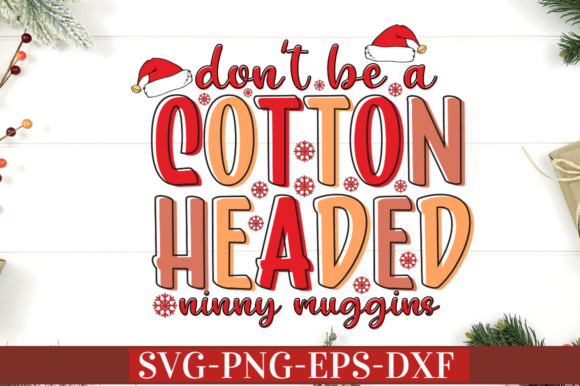
Don't Be a Cotton Headed Ninny Muggings: A Strategic Guide to Holiday Crafting Workflows
The holiday season often brings a surge of creative projects, from personalized family gifts to small-batch product lines for seasonal markets. At the center of many successful December workflows is a specific design element that has become a staple of modern festive crafting: the phrase "Don't Be a Cotton Headed Ninny Muggings." While rooted in pop culture nostalgia, integrating this specific motif into your production pipeline requires more than just downloading a file; it demands a strategic approach to file management, material selection, and application timing. Whether you are a hobbyist creating decor for your home or an entrepreneur scaling up inventory for Q4 sales, understanding how to effectively deploy this asset can significantly impact your efficiency and final product quality.
This guide explores the practical implementation of high-quality SVG cutting files featuring this iconic quote. We will examine where this design fits within a broader creative process, how to ensure compatibility across different cutting platforms, and the best practices for maintaining consistency in your output.
Integrating Design Assets into Your Production Pipeline
In any creative workflow, the preparation phase is critical. Before a blade ever touches vinyl or a heat press warms up, the digital asset must be vetted and organized. The "Don't Be a Cotton Headed Ninny Muggings" design serves as a versatile component that can be applied before, during, or after various stages of a project, depending on your specific goals.
For small business owners and freelancers, this design often acts as a catalyst for product development. In the pre-production stage, acquiring a premium SVG file ensures that you are working with clean vector paths. Unlike low-resolution images found on social media, a professional-grade file includes optimized nodes that prevent cutting errors. This reduces material waste—a crucial factor when managing margins during the busy holiday rush. By securing a file that includes multiple formats (SVG, PNG, EPS, DXF), you create a flexible foundation that interacts seamlessly with diverse software ecosystems, from Cricut Design Space to Silhouette Studio and even industrial cutting programs used by larger publishers or manufacturers.
For educators and community organizers, this asset fits into the planning phase of seasonal activities. Here, the focus shifts from mass production to engagement. The design can be prepared weeks in advance, stored in a centralized digital library, and retrieved instantly when needed for classroom decorations or workshop materials. The key is organization; tagging your files with relevant metadata ensures that when the timeline accelerates in December, you aren't wasting hours searching for the right asset.
Technical Compatibility and Software Workflow
One of the most common bottlenecks in crafting workflows is software incompatibility. A robust workflow accounts for the specific requirements of your hardware. The "Don't Be a Cotton Headed Ninny Muggings" SVG is designed to bridge these gaps. When importing this file into your preferred design software, several technical considerations come into play:
- Node Optimization: High-quality SVGs minimize unnecessary anchor points. This results in smoother cuts and faster processing times, which is vital when running batch jobs on machines like the Cricut Maker or Silhouette Cameo.
- Layer Management: Professional files often come with pre-separated layers. This allows you to easily assign different colors for multi-layer vinyl projects or isolate specific elements for paper crafting without manual tracing.
- Format Versatility: Having access to DXF and EPS formats means you are not locked into a single ecosystem. If you switch from a consumer-grade cutter to a commercial plotter, or if you need to send the design to a print-on-demand service, the asset remains usable without degradation.
Furthermore, the inclusion of a 300 DPI PNG version supports workflows that do not involve cutting. For marketers creating social media graphics or bloggers designing printable planners, this raster format ensures crisp text rendering on screens and in standard home printing environments. This dual-utility approach maximizes the return on investment for the digital asset, allowing it to serve both physical and digital marketing channels simultaneously.
Material Selection and Application Techniques
Once the digital file is prepared, the workflow moves to physical execution. The phrase "Don't Be a Cotton Headed Ninny Muggings" features varying line weights and potentially intricate lettering, which necessitates careful material selection. The success of the final product depends heavily on matching the design complexity with the appropriate medium.
For apparel customization, such as t-shirts and hoodies, heat transfer vinyl (HTV) is the standard. When using this design, it is advisable to perform a test cut on a scrap piece of material. This step verifies that the weeding process—the removal of excess vinyl—will be manageable. Intricate fonts may require a "sticky" mat and precise pressure settings to ensure that small interior details (like the counters in 'o' or 'e') remain intact during the cut. For professionals managing inventory, establishing a standard operating procedure (SOP) for these test cuts prevents costly errors on finished goods.
In the realm of home décor and stickers, adhesive vinyl offers durability and weather resistance. If you are creating decals for mugs or windows, the workflow involves not just cutting, but also proper application techniques. Using transfer tape effectively is essential here. Because the phrase is relatively long, aligning it straight on a curved surface like a mug requires a methodical approach, often involving hinge methods or laser alignment tools available on newer cutting machines.
Paper crafters and scrapbookers will find this design equally useful for card making and gift tags. Here, the workflow shifts from weeding to layering. Cardstock of varying weights can be used to create depth, with the SVG serving as a template for die-cutting or precise knife cutting. The consistency of the vector file ensures that every tag produced is identical, maintaining a professional look for handmade gifts or boutique packaging.
Scaling for Business and Long-Term Utility
For entrepreneurs and content creators, the value of a design asset extends beyond a single holiday season. While "Don't Be a Cotton Headed Ninny Muggings" is seasonally relevant, the infrastructure built around using it can be leveraged year-round. The processes established for file organization, machine calibration, and quality control become part of your permanent operational toolkit.
Consider the aspect of brand consistency. If you are selling products featuring this design, ensuring that every unit meets a high standard is paramount for customer retention. Implementing a quality control checkpoint after the weeding stage but before the pressing stage can catch defects early. This might involve checking for torn letters or incomplete cuts. Documenting these checks creates a reproducible standard that can be applied to future designs, regardless of the theme.
Moreover, the versatility of the file supports product diversification. The same SVG used for a t-shirt can be resized and adapted for a tote bag, a laptop skin, or a wall decal. This adaptability allows businesses to test new product categories with minimal additional investment. By understanding the limitations and strengths of the design file, you can confidently expand your offerings without compromising on quality.
Practical Tips for Efficient Execution
To fully integrate this design into your routine, consider the following practical observations derived from experienced workflows:
- Batch Processing: If you have multiple orders or projects, group them by material type. Cutting all your HTV projects at once saves time on mat changes and machine setup.
- File Backup: Always store your purchased SVG files in at least two locations (e.g., cloud storage and an external hard drive). Digital assets are the backbone of your creative business; losing them can halt production.
- Tool Maintenance: Intricate designs dull blades faster. Keep a log of your blade usage and replace them proactively to avoid jagged edges on detailed text.
- Mockups First: Before committing to expensive materials, use the PNG version to create digital mockups. This helps visualize the final product and can be used for pre-sales or marketing materials before the physical item is even made.
Ultimately, the goal is to make the creation process feel seamless. By treating the "Don't Be a Cotton Headed Ninny Muggings" SVG not just as a picture, but as a functional tool within a larger system, you elevate the quality of your output. Whether you are a productivity-minded user optimizing your home office crafts or a publisher looking for engaging seasonal content, the principles of preparation, compatibility, and execution remain the same.
The integration of high-quality digital assets into your workflow empowers you to focus on creativity rather than troubleshooting. With the right file and a structured approach, you can deliver professional-grade results that resonate with audiences and stand the test of time, turning a simple holiday quote into a cornerstone of your creative portfolio.